I was quite alarmed at the recent spate of suicides in Malaysia and the possible incitement of them by bullying. Is bullying a psychological issue?
Yes, it is, but first, let us define bullying.
Bullying is a mean-spirited and harmful behaviour that has a distinctive pattern.
The pattern is of repeatedly and deliberately harming and humiliating others, especially people who are smaller, weaker, of “lesser status”, younger or in any way more at risk than the bully.
A bully usually has more “power” and “status” than the bullied person, and specifically targets the person(s) of lesser power.
Is bullying usually physical?
Bullying can come in all shapes and forms.
It can be verbal, such as calling people names, making fun of them, harassing them, intimidating them and being rude to them.
It can be physical, such as pushing, kicking, shoving or hitting people, or putting objects in their path to hurt them.
It can also involve excluding someone from a group, spreading rumours about them either verbally or online.
Sexual harassment is also a form of bullying.
Is it girls who are more likely to be bullied?
Both boys and girls have equal chance of being bullied.
Most bullying happens to children in school or the playground.
In the United States, about one in five children have reported being bullied at one point or another.
Older teens and adults can be bullied too.
You can be bullied at any age and anywhere, e.g. at work, the grocery store, college or a senior home.
Does a bully have psychological issues?
Yes, bullies lack prosocial behaviour.
They are not generally anxious and they lack empathy.
They possess a sort of paranoia that leads them to misread the intentions of other people.
Bullies tend to imagine threats and hostility even when there are no threats and hostility in a situation.
For example, when a new person joins a team, the seasoned employee who has been there for many years and who happens to be a bully may try to intimidate this new colleague.
This could take the form of excluding the new colleague from group lunches, gossiping about the new colleague, and trying to undermine the new colleague in front of the boss.
This is because the bully sees the new colleague as a threat.
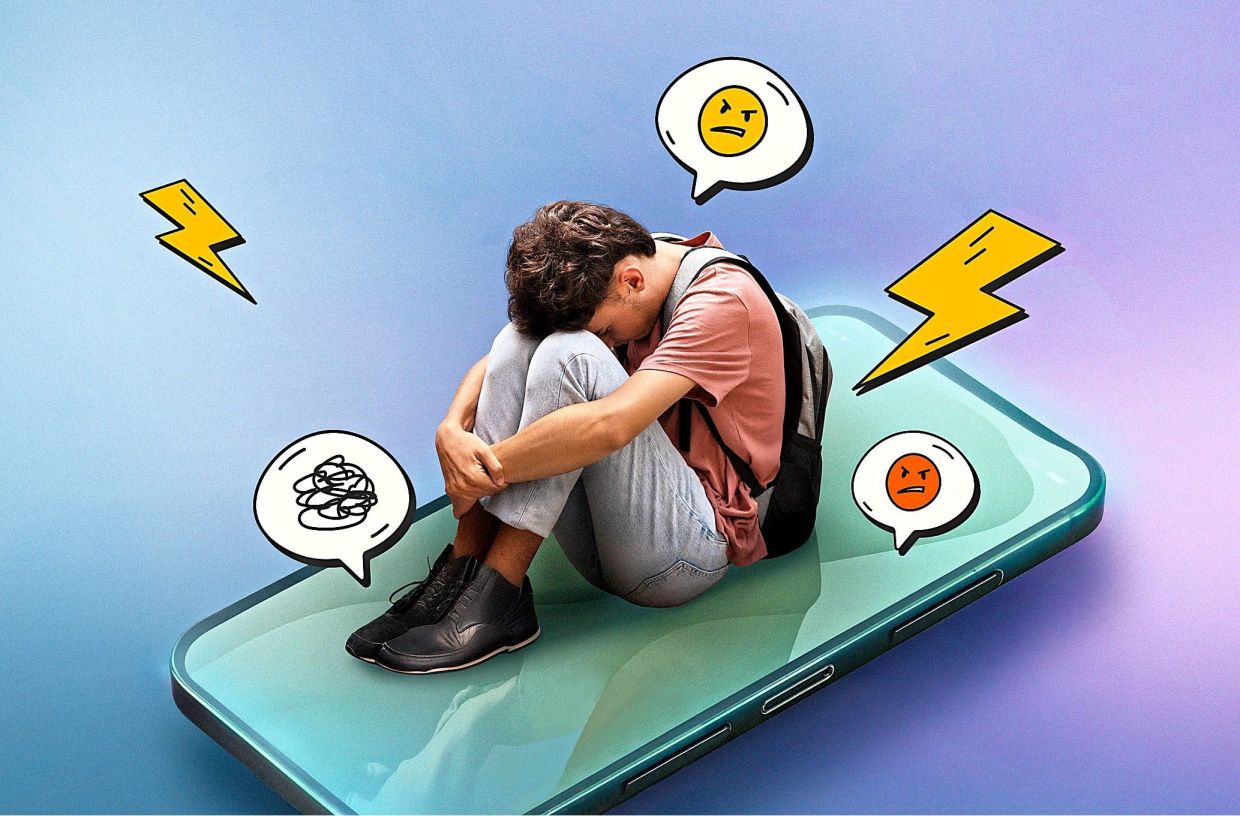 The anonymity provided by the Internet has allowed bullies who would otherwise not face their victims in person the opportunity to behave badly. — Freepik
Are bullies born then?
Bullies are not born; they are made at an early age.
Two-year-olds have a normal sort of aggression.
They go around destroying things, and sometimes hitting other younger, weaker children, including a new baby in the house.
If you do not parent them well and put restraints on such behaviour, they will continue that behaviour as they get older.
Bullies tend to model and copy bullying behaviour if they see others doing it.
Family members tend to be a big influence.
If a child grows up with parents who have a lot of quarrels and who like to implement physical punishments, the child thinks this is normal and acceptable behaviour.
Streaming, music, gaming and media tend to glamourise violence too.
So a child who watches and hears all this will think that this sort of behaviour is “cool”.
If a child befriends a group of bullies, he/she is likely to be a bully too because it is considered “cool” to be in that group.
https://lernix.com.my/ibm-cognos-bi-training-courses-malaysia
Leave a Reply